
Identification and Remodeling
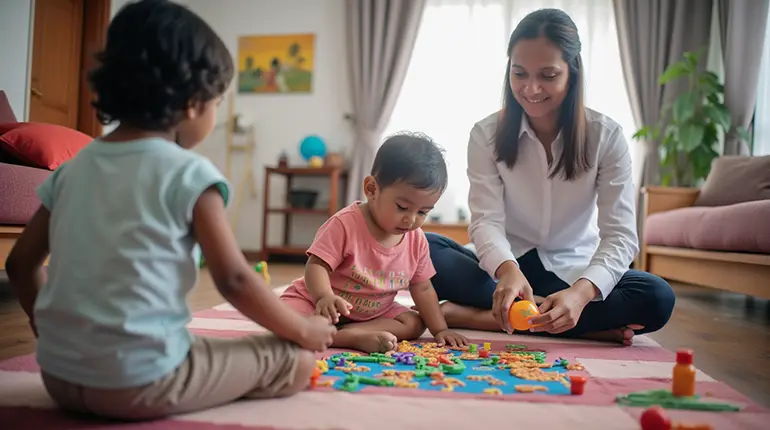
At WizKids, we understand that each child with autism and special needs faces unique challenges that require individualized attention and support. One of the core elements of our approach is identifying these challenges early and remodeling certain behaviors, skills, and learning approaches to help children overcome their difficulties and thrive in their environment. Through personalized assessments, targeted interventions, and collaborative therapy approaches, we create strategies that support the growth and development of each child.
1. Identification of Challenges
The first step in supporting a child with autism or special needs is identifying the specific challenges they face. Early identification is crucial because the earlier we can pinpoint areas of difficulty, the sooner we can develop targeted interventions to address those challenges. This involves working closely with parents, caregivers, and educational professionals to gather a comprehensive understanding of the child’s needs.
Common Challenges Identified in Children with Autism and Special Needs:
- Communication Difficulties: Many children with autism have challenges with verbal and non-verbal communication, making it difficult for them to express their needs, understand others, or engage in conversations. These communication barriers can lead to frustration, social isolation, and developmental delays.
- Sensory Processing Issues: Sensory sensitivities, such as being overly sensitive to light, sound, touch, or smell, are common in children with autism. Conversely, some children may seek excessive sensory input, leading to behavior difficulties or challenges in maintaining focus.
- Behavioral Challenges: Children with autism may engage in behaviors such as self-injury, aggression, tantrums, or repetitive movements. These behaviors can be a form of communication, expressing distress, anxiety, or frustration.
- Social Interaction Difficulties: Many children with special needs struggle to understand social cues, take turns in conversations, and make friends. They may experience challenges in developing social skills or understanding the perspectives of others.
- Cognitive and Academic Delays: Children with autism or special needs may experience delays in areas such as memory, problem-solving, abstract thinking, and academic skills. These delays can impact their ability to participate in learning activities and thrive in a traditional classroom setting.
- Motor Skill Challenges: Fine and gross motor skills may be underdeveloped in some children with autism or other special needs, affecting their ability to perform daily activities like writing, dressing, or participating in physical activities.
2. Remodeling and Interventions
Once the challenges are identified, the next step is remodeling the child’s approach to learning and socialization. Remodeling in the context of therapy refers to the process of reshaping behaviors, skills, and responses through targeted interventions that help children manage their challenges more effectively. At WizKids, we take a multi-faceted approach that involves therapy, individualized support, and a supportive environment to guide children toward success.
Key Strategies for Remodeling Challenges:
- Individualized Behavior Plans: After identifying behavioral challenges, we create individualized behavior intervention plans. These plans are based on the principles of Applied Behavior Analysis (ABA), focusing on reinforcing positive behaviors while decreasing negative behaviors. Through consistent reinforcement and structured activities, we help children learn to replace maladaptive behaviors with more appropriate ones.
- Positive Reinforcement: We use rewards and praise to encourage desired behaviors, such as sharing, following instructions, or using words to communicate.
- Task Structuring: Breaking down complex tasks into smaller, achievable steps can help children understand what is expected of them, which builds their confidence and ability to succeed.
- Speech and Language Therapy for Communication: For children with communication difficulties, speech and language therapy is essential. Our therapists use a variety of techniques to help children improve their language skills, whether verbal or non-verbal. By working on speech clarity, vocabulary development, social communication, and understanding non-verbal cues, we can help children express themselves more effectively.
- Augmentative Communication: For children who have limited verbal abilities, we may introduce augmentative communication systems, such as picture exchange communication systems (PECS) or speech-generating devices, to enhance communication.
- Sensory Integration Therapy: Sensory processing difficulties can be addressed through sensory integration therapy. We provide an environment that helps children process sensory input in a regulated way, reducing the stress that sensory sensitivities can cause. The goal of sensory integration therapy is to help children feel more comfortable with sensory input while teaching them how to manage it.
- Gradual Exposure: Children who are hypersensitive to certain stimuli are gently introduced to these sensory experiences in a controlled manner to desensitize them over time.
- Sensory Breaks: For children who may become overwhelmed by sensory stimuli, we provide sensory breaks where they can retreat to a calm and quiet space to self-regulate.
- Social Skills Training: One of the most important aspects of remodeling for children with autism or special needs is improving their social skills. We provide structured opportunities for children to interact with peers in controlled settings, teaching them the necessary social skills to engage in meaningful relationships.
- Role-Playing and Social Scripts: Children learn how to interact with others using role-playing exercises and social scripts that teach them appropriate responses and behaviors in social settings.
- Peer Modeling: Peer interactions are encouraged, with typically developing children serving as role models for children with autism to learn positive social behaviors.
- Cognitive and Academic Support: For children experiencing delays in cognitive development or academic skills, we implement tailored teaching strategies that accommodate their learning styles. Our therapists and educators use tools such as visual aids, hands-on activities, and reinforced learning to help children grasp concepts at their own pace.
- Visual Supports: Visual schedules, charts, and diagrams help children with autism focus better and understand academic concepts. Visual aids provide clarity and consistency, which enhances their ability to follow instructions.
- Specialized Academic Programs: We provide individualized academic programs that break down complex subjects and reinforce learning through repetitive practice and engaging activities.
- Motor Skill Development: Children with motor skill challenges benefit from occupational therapy and physical therapy. Through targeted exercises, activities, and games, children can improve their fine and gross motor skills, enabling them to become more independent in daily tasks and physical activities.
- Fine Motor Skills: Activities like drawing, using utensils, or buttoning clothes help improve hand-eye coordination and dexterity.
- Gross Motor Skills: Activities such as running, jumping, or climbing help improve coordination and strength.
3. Collaborative Approach
The remodeling process is not done in isolation. At WizKids, we work closely with parents, teachers, caregivers, and other professionals to ensure a holistic approach. Parent counseling is an essential component, as it helps families understand their child’s challenges and provides strategies for supporting their child at home. We also encourage active participation in the child’s learning process to create consistency and ensure that the child’s progress continues both in and out of the classroom.